
PITBULL DOORS GUIDE • 9 MIN READ
Double pane or triple pane: what should homeowners compare?
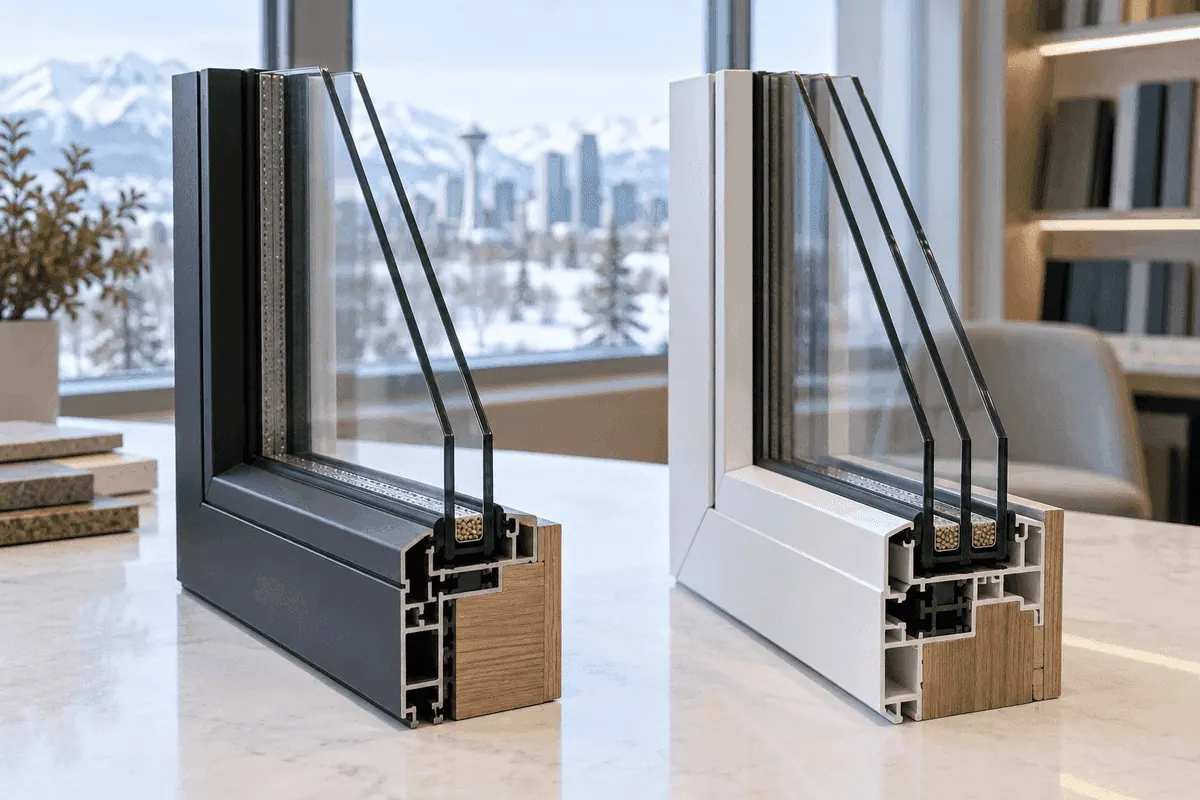
Triple-pane glass can improve thermal performance, but pane count alone does not describe the complete window. Calgary homeowners should compare the tested performance of the whole window, the location of each opening and the comfort problem they are trying to solve.
What double-pane and triple-pane actually mean
A double-pane insulating glass unit has two sheets of glass separated by one sealed space. A triple-pane unit has three sheets of glass and two sealed spaces. Those spaces may contain insulating gas, and the glass may receive one or more Low-E coatings designed to manage heat transfer and solar energy.
Adding a pane can improve insulation, interior glass temperature and comfort, but the result depends on the complete glass package. Pane count does not tell you the coating surfaces, spacer design, gas fill, glass thickness or whether the product is suited to a particular exposure.
Compare the complete window—not only the glass
Frame construction, glazing, Low-E coatings, gas fills, spacer systems and air leakage all affect performance. Two products with the same number of panes can perform differently. A well-performing double-pane window can be a better choice than a poorly designed triple-pane system.
Ask for the performance information for the exact size, operating style and glass package being quoted. A fixed window and a window that opens may not have identical ratings even when they come from the same product line.
Understand the common window ratings
U-factor describes the rate of heat transfer through the complete product; lower values indicate slower heat transfer. Solar Heat Gain Coefficient describes how much solar energy passes through. Canada’s Energy Rating combines heat loss, solar gain and air leakage into one value.
Ratings are comparison tools, not promises of a particular utility-bill reduction. The home, installation, window area, orientation and occupant habits also influence the result.
- U-factor: heat transfer through the product
- SHGC: solar heat admitted through the window
- ER: a Canadian combined energy-performance value
- Air leakage: uncontrolled air passing through the tested product
How Calgary winter conditions affect the decision
During cold weather, a higher-performing glass package can keep the room-side surface of the glass warmer. That can improve comfort near large openings and may reduce the likelihood of room-side condensation under the same indoor humidity conditions. It cannot eliminate condensation caused by excessive humidity or restricted airflow.
Homes with large glass areas, exposed elevations or rooms that are consistently uncomfortable may benefit more from the additional performance than a small, sheltered opening. Installation quality and insulation around the frame remain essential regardless of pane count.
Solar gain can be helpful or uncomfortable
Sunlight through a window can contribute useful heat in winter, but too much solar gain may overheat a room or create glare. A south-facing living area, a west-facing bedroom and a shaded north-facing opening can have different needs.
The correct Low-E and solar-gain choice may therefore vary around the home. Selecting one glass package for every elevation without considering orientation can miss an opportunity to balance winter performance and summer comfort.
Weight, size and window operation matter
Triple-pane units are heavier than comparable double-pane units. The window system must be designed to carry that weight, particularly in large operating sashes. Product limits, hardware and practical operation should be confirmed before the order is finalized.
Large openings may also be divided differently or use fixed and operating sections to balance view, ventilation and performance. This is one reason an in-home measurement and product-specific proposal are more useful than a generic pane-count recommendation.
Noise, condensation and comfort expectations
More panes do not automatically provide the best sound control. Glass thickness, spacing, laminated glass, the frame, installation and the type of exterior noise all affect acoustic performance. If noise is a priority, say so before the product is selected.
Triple-pane glass may improve interior surface temperature, but condensation can still form when indoor humidity is high enough for the outdoor temperature. Window coverings and limited air circulation can also create a colder pocket at the glass.
Compare value over the planned life of the window
Review the price difference in the context of the full installed project, the rooms involved and how long you expect to remain in the home. Paying for higher performance where it addresses a real comfort issue may be worthwhile; adding it to every opening without examining the need may not be.
A useful quote identifies the frame material, operating style, glass package, finishing and warranty rather than listing only double or triple pane. Pitbull provides a 10-year workmanship warranty, while product warranties vary by manufacturer and are confirmed with the buyer.
Questions to ask before choosing
A free consultation should connect the product data to your home. Pitbull Doors works with local, Canadian and international manufacturers, so the recommendation is not limited to one catalogue.
- What are the U-factor, SHGC, ER and air-leakage values for the quoted product?
- Which Low-E coating and gas fill are included?
- Is the rating for the complete window or only the centre of glass?
- Would different elevations benefit from different glass packages?
- Are there size or operating limits for triple-pane sashes?
- What installation and finishing work is included in the estimate?
The best choice depends on the opening
Triple pane is not automatically necessary for every Calgary home, and double pane is not automatically the value choice. The right decision is the glass and frame combination that meets the homeowner’s comfort, orientation, operation and budget requirements.
Pitbull offers both double- and triple-pane windows and can review the openings in person before preparing a written estimate. Final measurements and specifications are confirmed after approval and before ordering.
Look beyond the centre-of-glass number
A glass-only value describes the insulating glass unit under specific test conditions. A whole-window value also reflects the frame, sash, spacer, seals and the way an operating unit closes. When comparing replacement windows in Calgary, confirm whether the number on a brochure applies to the complete product or only the centre of the glass.
The size and configuration quoted also matter. A large fixed picture window contains more glass and fewer moving joints than an operating window. A casement, slider, hung window and tilt-and-turn unit may therefore produce different whole-product results even when their glass descriptions sound similar.
This distinction helps prevent a common buying mistake: choosing a product because one attractive number is shown prominently while the complete-window documentation is missing. Ask the salesperson to identify the exact series, style, size assumptions and glass package behind every rating used in the proposal.
Installation can protect—or undermine—the product choice
Even a high-performing triple-pane window still has to be fitted, supported, insulated and sealed correctly in the existing wall opening. The transition between the new frame and the house is part of the comfort system. Air movement or missing insulation around that transition can leave a homeowner disappointed with an otherwise capable product.
A replacement estimate should explain the removal method, insulation around the frame, interior trim, exterior finishing, disposal and treatment of visible opening conditions. Those details are more useful than a pane-count comparison by itself because they show how the complete installed result will be created.
Calgary installations also have to be planned around safe weather conditions. Pitbull works year-round when conditions are suitable, but scheduling should protect the opening, materials and sealants rather than forcing work into unsuitable weather simply to meet a date.
A room-by-room decision often delivers better value
Homeowners do not always need the same glass package in every opening. A large west-facing family-room window may need different solar control than a shaded bedroom window. A north-facing opening beside a favourite chair may place more emphasis on interior surface temperature, while a small utility-room window may not justify the same upgrade.
During a consultation, identify the rooms with cold-glass discomfort, drafts, glare, overheating, condensation or outside noise. Then connect each symptom to the frame, glass, operation and installation—not automatically to a third pane. This creates a defensible specification and makes competing quotes easier to compare.
For a quality-focused Calgary window replacement, the strongest proposal is not the one with the longest upgrade list. It is the one that clearly explains why each product and glass package was selected, what is included in the installation, and which warranty applies after the work is complete.
Service across Calgary and surrounding communities
Pitbull Doors serves Calgary, Airdrie, Cochrane, Chestermere, Okotoks and High River. Projects farther away can be reviewed individually. Product availability, travel and installation conditions are confirmed before work is scheduled.
Free consultations are available for replacement projects. Most repair requests are reviewed from a description and photos first so the team can identify the likely service requirements.